“But we have this precious treasure [the good news about salvation] in [unworthy] earthen vessels [of human frailty], so that the grandeur and surpassing greatness of the power will be [shown to be] from God [His sufficiency] and not from ourselves. We are pressured in every way [hedged in], but not crushed; perplexed [unsure of finding a way out], but not driven to despair; hunted down and persecuted, but not deserted [to stand alone]; struck down, but never destroyed;” 2 CORINTHIANS 4:7-9 AMP
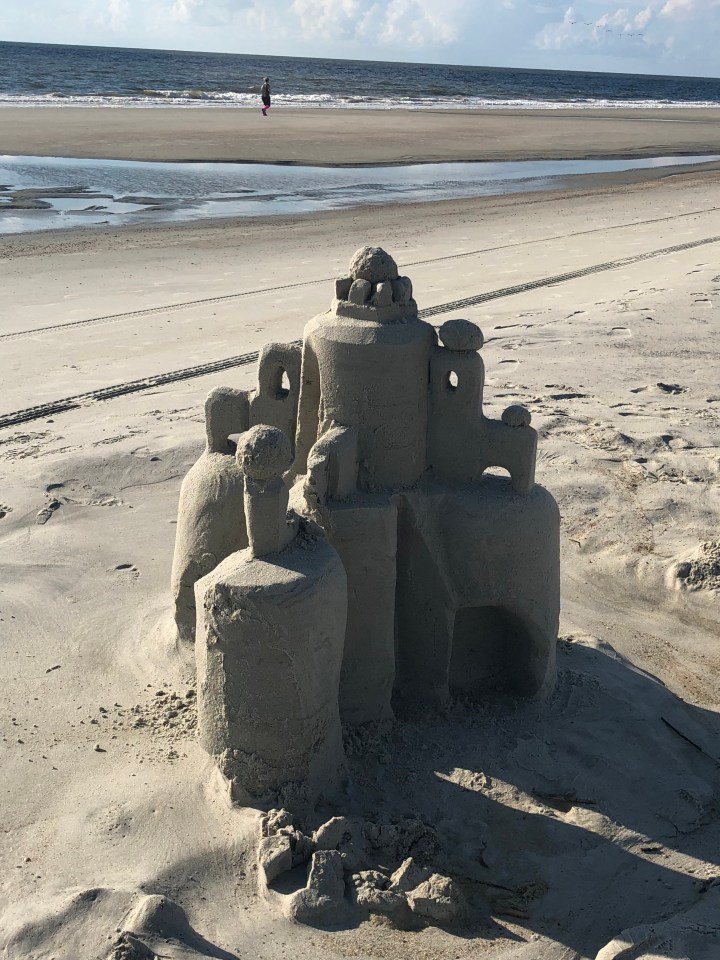
Life is full of sandcastles…millions of things that are tied to our humanity. If you’ve ever sat next to the ocean or in a sandbox putting time and energy into building a sandcastle, you’re probably familiar with the frustration that comes when they fall apart. Whether brought down slowly by ocean waves as the tide rolls in, or kicked apart suddenly in the sandbox by an over-zealous playmate, there’s always a sense of disappointment and defeat of one kind or another left behind.
It is so easy to wrap our hopes, our identities, and even our happiness, on things that tether us to this world and not the next. We become afraid of losing things in this life, especially life itself. It’s so difficult to comprehend the reality of our life beyond this one, particularly with the reality of the one we’re living up in our grill each and every day. To make things even more complicated, we’re dealing with incessant attacks on our hearts and minds by the adversary.
He will use every mistake we make against us. His primary goal is to weaken and destroy our spirits. We become convinced that we don’t deserve good things, or that we don’t deserve to be forgiven when we make a wrong turn. We can waste a lot of time beating up on ourselves for past events, especially when those events cost us dearly. But you see, this is exactly the opening Satan is looking for into our minds. He wants us feeling worthless and full of pain. He knows this is when we’re most vulnerable.
Joyce Meyer once spoke of a time when she’d done something she knew to be sinful in nature. She was walking around beating herself up about it, when she says God stopped her in her tracks and asked her how long it would take before she’d be able to forgive herself and let it go. She went on to say that her response was that it would be a few days before she’d allow herself to let go of the suffering from it. It was then that God asked about her faith in the sacrifice Jesus made on her behalf, and whether or not she accepted His sacrifice for her. She said that of course she did!
Then the response in her heart was essentially that if Christ’s sacrifice was good enough for her then, why was she going to keep punishing herself for a few more days? She realized that by continuing to beat up on herself (or on someone else, for that matter), she was basically saying that Christ needed her suffering on top of His own in order to earn forgiveness. In spite of her faith, she realized that her actions were telling the Savior that she didn’t trust in His sacrifice alone.
I know without a doubt that we are all battling our own regrets and deep desires for at least one “do-over” in life, but our only real “do-over” is the one we receive from God when we ask forgiveness in the name of Jesus Christ. What’s the best part of all, is that there is no limit to how many times we are allowed this spiritual do-over. We have to realize that there are so many things in this world that can feel unforgivable, but we must also take into account the humble and contrite spirits in the face of those seemingly unforgivable sins.
“For the high and exalted One He who inhabits eternity, Whose name is Holy says this, ‘I dwell on the high and holy place, but also with the contrite and humble in spirit in order to revive the spirit of the humble and to revive the heart of the contrite [overcome with sorrow for sin].'” Isaiah 57:15 AMP
There is a lot of love and a lot of peace stolen from this world because of the success the enemy has in his quest to tear us and our most important relationships apart. All the more reason we need to differentiate between the fortresses and the sandcastles of life. But remember, even when a sandcastle falls apart, the sand that made it still exists, and can always be made into something new, and often better than before.
 Love the Hand of God